Decades of Influence: Tracing How Global Events Reshaped Themes in Classic and Progressive Slots
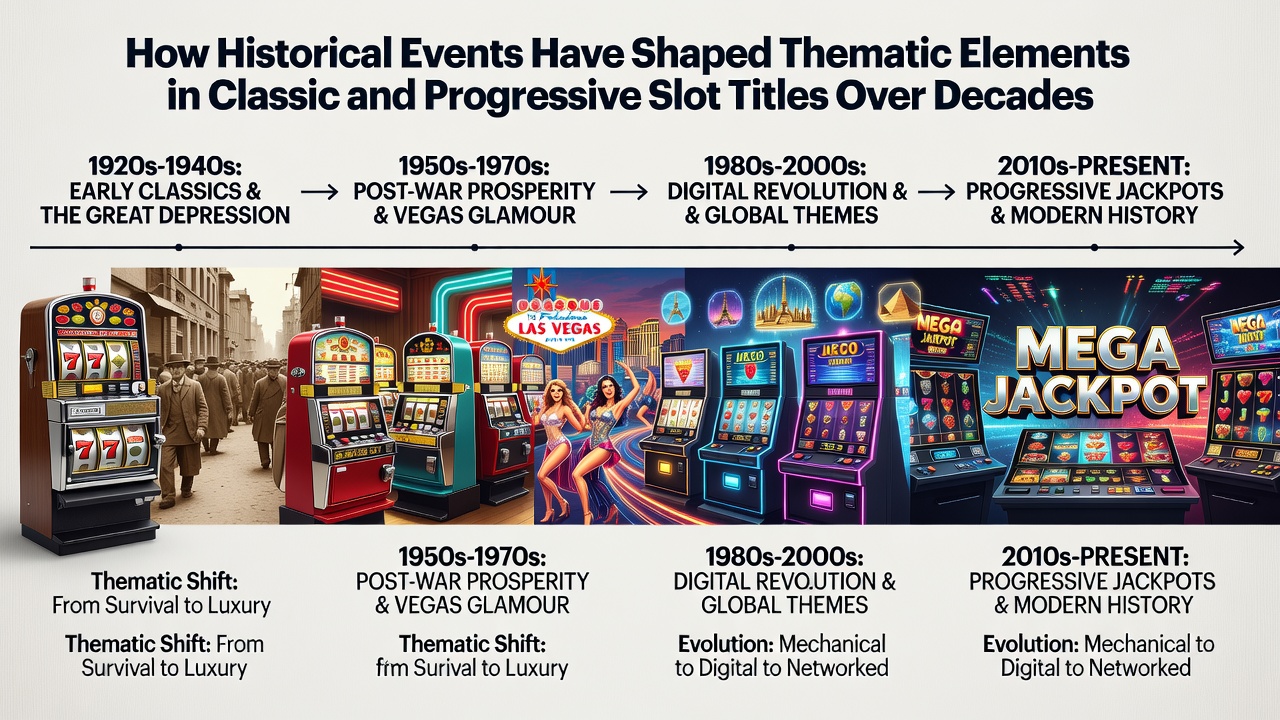
Slot machines first appeared in the late 19th century, yet their thematic content began to mirror larger world events only after the 1920s when manufacturers started moving beyond simple fruit symbols, and by the 1930s the Great Depression prompted many titles to incorporate motifs of luck and escape that resonated with players facing economic hardship. Manufacturers responded by adding symbols such as horseshoes and four-leaf clovers while stories of gold rushes and adventure began to surface in early mechanical games, reflecting a broader cultural desire for stories of sudden fortune amid widespread scarcity.
Post-War Narratives and the Rise of Adventure Themes
After World War II ended in 1945, slot themes shifted toward exploration and heroism as manufacturers drew from returning soldiers' experiences and the optimism of reconstruction, and machines from the 1950s frequently featured military imagery alongside symbols of travel and discovery while progressive jackpots, which gained traction in the 1960s, started to tie large payouts to narratives of exploration that echoed the era's space race and international expeditions. Data from industry archives show that titles released between 1955 and 1970 increasingly used reel symbols tied to airplanes, maps, and treasure chests, patterns that aligned with public interest in global recovery and technological progress.
Cultural Shifts of the 1960s Through 1980s
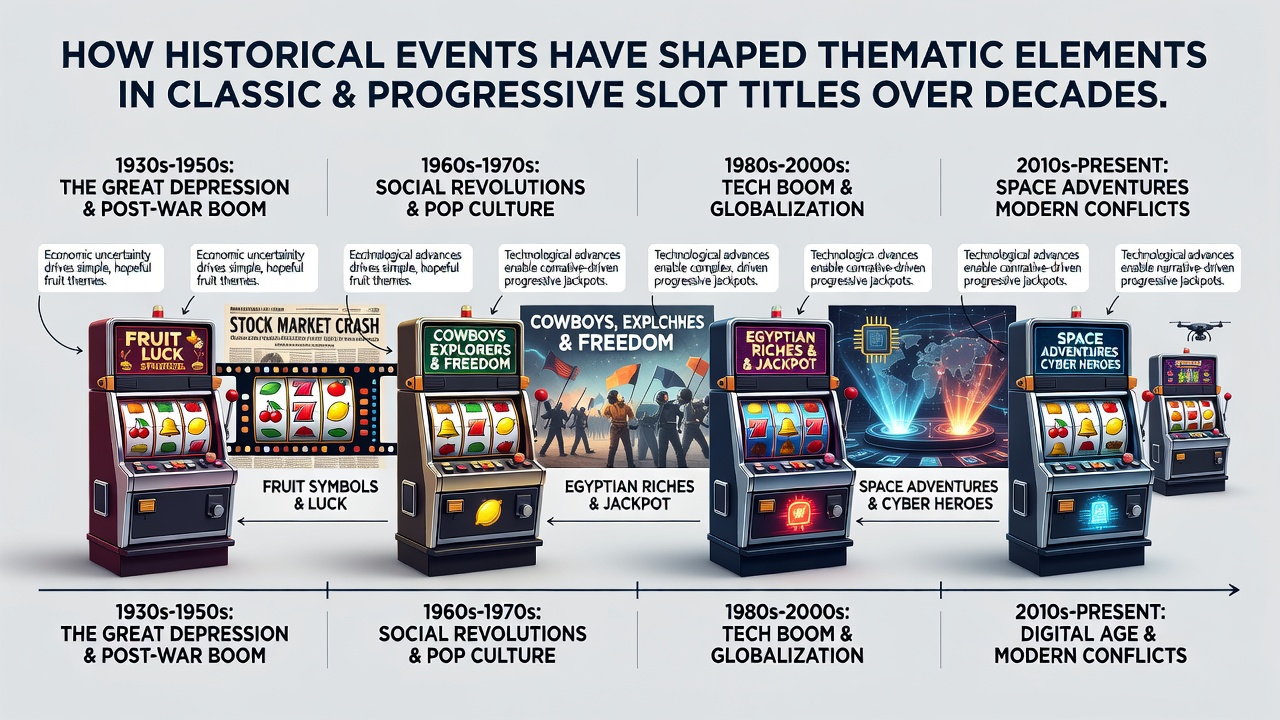
The social upheavals of the 1960s introduced themes centered on counterculture and fantasy, and manufacturers began producing games that referenced music festivals, peace symbols, and psychedelic imagery while the 1970s energy crises led to a brief surge in titles featuring oil wells and resource extraction motifs that reflected contemporary economic anxieties. By the 1980s, the Cold War and technological advancement inspired machines with space exploration and computer themes, and progressive systems expanded these ideas by linking multiple machines across casino floors to create shared jackpot narratives that mirrored the growing interconnectedness of global events.
Digital Transition and 1990s Global Events
The introduction of video slots in the 1990s coincided with the fall of the Berlin Wall and the rise of the internet, prompting developers to create games that incorporated world-unity themes and digital-age symbols while progressive jackpots began to span entire casino networks, and reports from the Nevada Gaming Control Board indicate that machine counts in the state grew rapidly during this period as new thematic layers addressed both historical reflection and emerging technology. Titles from this decade often featured symbols drawn from recent political changes and global markets, creating reel stories that connected players to events unfolding thousands of miles away.
21st Century Events and Thematic Adaptation
The early 2000s brought themes influenced by financial market volatility and international conflicts, and developers incorporated elements of resilience and discovery into both classic three-reel formats and expanding progressive networks while the 2008 financial crisis led to renewed interest in wealth and treasure motifs across many titles. Research conducted by the University of Nevada, Las Vegas Center for Gaming Research shows measurable increases in adventure and fortune-based themes during periods of economic uncertainty, patterns that continued into the 2010s as climate awareness and technological milestones such as space tourism began appearing in reel designs. In July 2026 several operators introduced limited-time progressive variants that referenced historical anniversaries of major scientific achievements, linking current jackpot pools to past events through updated symbol sets and narrative progressions.
Regulatory and Technological Influences on Theme Choices
Government regulations in various regions have also guided how historical events translate into slot content, and authorities in Australia and several Canadian provinces require content reviews that consider cultural sensitivity when themes draw from recent history, leading developers to balance factual references with entertainment value. Progressive networks, which rely on interconnected prize pools across multiple jurisdictions, must navigate these rules while maintaining thematic consistency, and industry reports reveal that titles released after 2020 frequently blend historical events with fictional elements to comply with diverse licensing requirements across North America and Europe.
Conclusion
Historical events continue to supply slot developers with source material that evolves alongside technology and regulation, and the progression from simple mechanical symbols to complex networked progressives demonstrates how external circumstances shape reel content without altering the fundamental appeal of chance-based entertainment. Observers note that both classic and progressive formats maintain this connection to the past while adapting to present-day player expectations and jurisdictional standards.