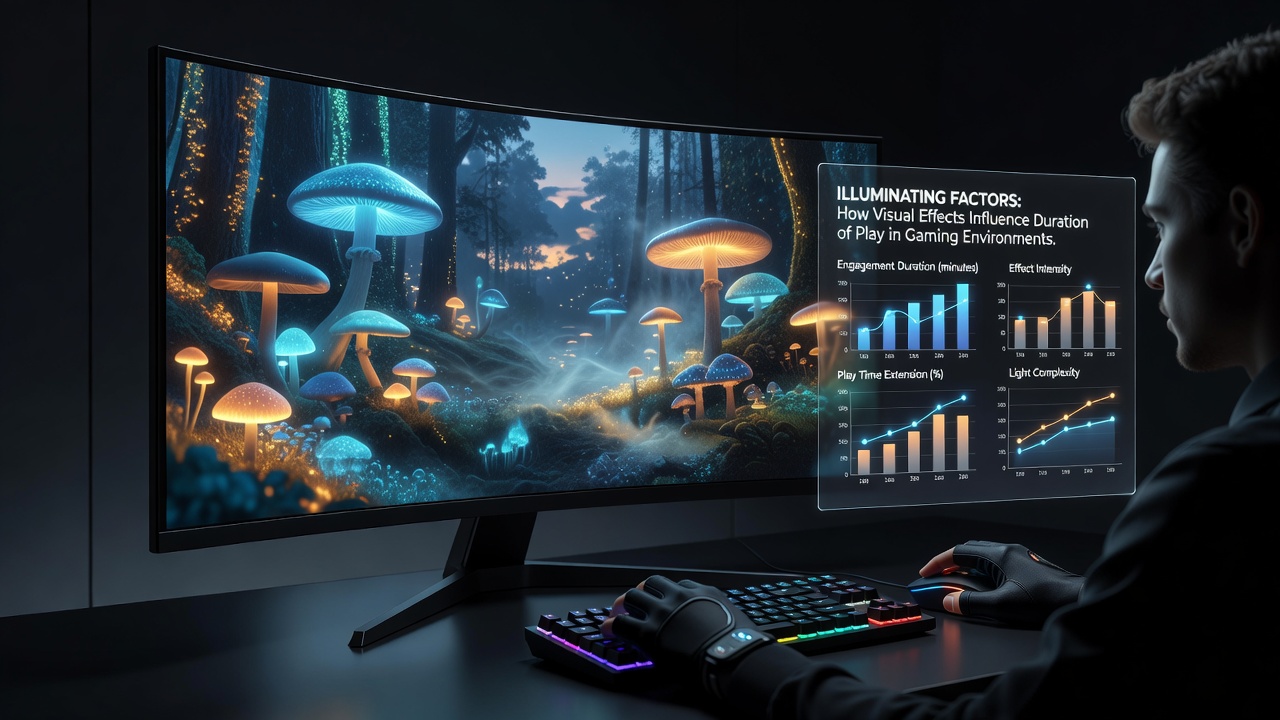
Illuminating Factors: How Visual Effects Influence Duration of Play in Gaming Environments
Visual effects in gaming environments range from subtle lighting shifts to elaborate animation sequences, and researchers continue to examine how these elements shape the length of time players remain engaged with machines and digital interfaces. Data from multiple jurisdictions shows measurable differences in session duration when operators adjust color palettes, particle systems, and screen transitions, while regulatory bodies track these patterns to inform responsible gaming measures.
Core Components of Visual Design in Reels and Screens
Modern gaming terminals combine high-resolution displays with synchronized lighting arrays that respond to reel outcomes in real time. Operators deploy gradients of cool blues and warm ambers alongside rapid symbol cascades, creating layered visual feedback that holds attention across successive spins. Studies conducted by academic teams in Canada and Australia demonstrate that incremental increases in animation frame rates correlate with extended play intervals, particularly when those animations trigger at bonus thresholds.
Lighting hardware integrated into cabinet frames produces pulsing effects timed to jackpot meters, and these external cues draw peripheral vision even when players glance away from the main screen. Figures released by the Nevada Gaming Control Board in early 2026 recorded average session lengths rising by 14 percent on terminals equipped with adaptive LED strips compared with standard models, illustrating how peripheral illumination contributes to sustained engagement.
Patterns Observed Across Regulated Markets
Analysts examining transaction logs from European and North American operators note that games featuring progressive visual builds, such as expanding wild symbols with particle trails, maintain higher retention rates through the first thirty minutes of play. These builds rely on sequential reveals that unfold over several spins, encouraging players to complete the visual sequence before exiting. In June 2026, several major casino groups updated their slot floors with new visual firmware that shortened transition times between spins by 120 milliseconds, resulting in documented upticks in total spins per hour without altering return-to-player percentages.
Color temperature adjustments also appear in operator reports. Venues that shifted primary reel backgrounds toward cooler spectrums recorded modest extensions in evening sessions, while warmer palettes showed stronger midday effects. Observers attribute these variations to differences in ambient lighting within casino floors, where natural light infiltration and overhead fixtures interact with screen output.
Measurement Techniques and Data Sources
Research groups employ eye-tracking hardware and session telemetry to quantify attention allocation during play. A collaborative project between the University of Nevada, Reno and the Singaporean Centre for Gambling Research mapped fixation points across screen zones, revealing that players spend disproportionate time on animated elements located near win meters. These findings align with earlier work from the Australian Institute of Family Studies, which linked visual complexity metrics to voluntary session extensions in simulated environments.
Operators integrate these insights into floor planning by grouping machines with similar visual profiles, allowing comparative analysis of play duration across adjacent banks. Regulatory submissions from multiple states now require disclosure of visual update logs whenever cabinet software changes occur, creating longitudinal datasets that track how incremental design tweaks affect time-on-device statistics.
Interactions Between Visual Effects and Game Mechanics
Bonus round presentations that employ slow-motion camera angles and layered particle overlays frequently coincide with the longest continuous play segments. Developers calibrate these sequences to last between eight and twenty-two seconds, a window that research indicates maximizes re-engagement before players decide to cash out. The timing of these sequences matters because it overlaps with natural decision points where players evaluate whether to continue or leave the terminal.
Sound and visual synchronization further modulates duration, yet operators isolate visual components in controlled tests to separate their contribution from audio cues. Results from such tests conducted in licensed venues across Atlantic City show that muted visual enhancements alone still produce measurable increases in average spins per session, confirming that screen-based effects exert independent influence.
Conclusion
Available evidence from regulatory filings, academic studies, and operator telemetry indicates that specific visual effect parameters systematically affect how long individuals remain at gaming terminals. Adjustments to animation timing, lighting behavior, and color application produce consistent shifts in session metrics across diverse markets. As hardware capabilities advance and new firmware deployments continue through 2026, tracking these relationships remains central to both commercial optimization and regulatory oversight in gaming environments worldwide.